Tuesday, 29 September 2015

Research: Mise en scene: setting and iconography - Mrs. Quinlan

What is setting and iconography and why is it important?
Setting and iconography are a part of mise en scene. Iconography is an object with a significance to the scene that adds on to character representation. The choice of iconography is very important for a scene as it gives connotations and helps them infer the coming events in the in the approaching scene. On the other hand setting is where the scene is set. Setting changes according to the genre of the movie, the scene, and the characters personality traits. If it was a chaotic scene like a car chase; it’s usually set in busy cities and urban locations which are places with a lot of glamorous lights. whereas war or battle scenes are usually set in battle grounds which are usually rural battle fields isolated from the rest of the world.
                          
                                 psycho shower scene (1960)
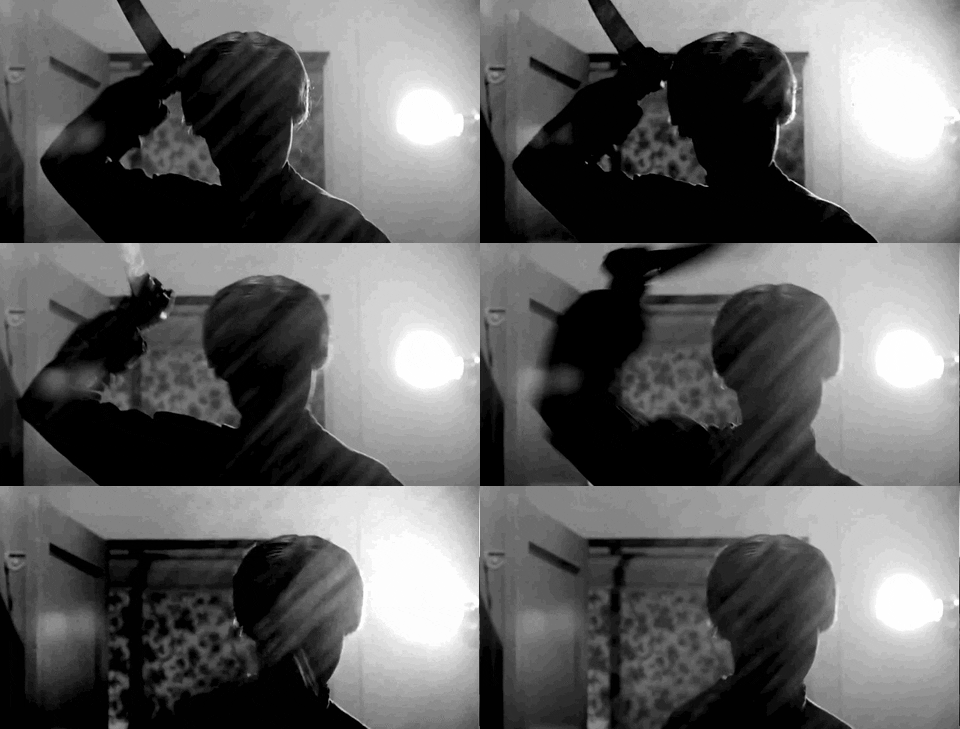
The shower scene in psycho is a very good example as the ‘knife’ tells the audience that it is about to cause mayhem and kill the damsel in distress. Also the way the antagonist was holding the knife was very important as it was clear that he wasn’t just showing her the knife but was in fact the too kill her.

                                            Silence Of The Lambs(1988)

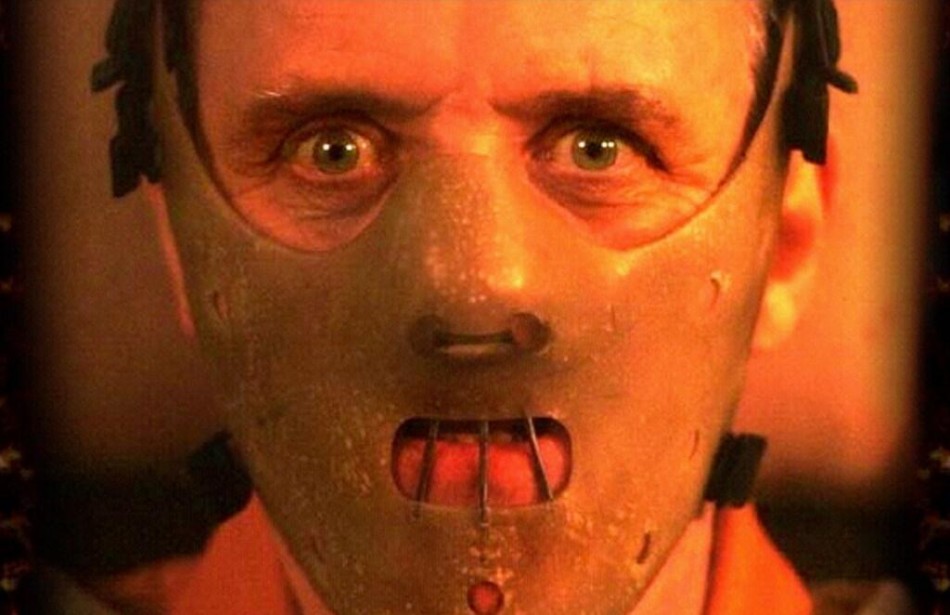
Moreover In 'Silence of the lambs,' the mask covering only the characters mouth is very significant as it indicates to the audience that the danger lies within his mouth. It also creates fear for the audience as it is an unusual mask that hasn't been seen before which proves that the character is an antagonist that with traits that hadn't been seen before.


common conventional settings for thriller films:

Isolated areas:


The setting for 'Saw' is a conventional thriller setting as it is an isolated area far from society, so the victims are never found. Also the setting is a dirty cubical which is an unusual choice and gives connotations into the Antagonists state of mind as it is clearly shown that a lot of thought has gone through picking the setting. This also shows the antagonist has been planning his act for a long time.

Forests:


'The Revenant' is an action thriller movie, so it conventional for it to be set in a rural forest. Forest are used in many thriller movies as it naturally connotes fear to the audience. However the forest needs to be accompanied with low key lighting to indicate danger, however, the character being alone in a forest with the iconography gun, makes the audience feel scared for the character as they don't know what's awaiting him.

A Church:


The film 'The rite' was set in a church which tells the audience its a religious thriller. Although some people may feel at home in church with the help of other mise en scene techniques including sound and lighting, a church can cause fear, dismay, and horror upon the characters as religion can also connote dead people and the devil.


conclusion:
In conclusion I intend to use isolated rooms with low key lighting to create an uneasy feeling for the audience. This will connote the themes and genre of my thriller movie before the audience has watched it

Monday, 21 September 2015

Research: Sound - Mrs. Quinlan

 The use of sound is very significant for thriller movies as it helps create tension within the scene and helps the audience interact with the film as the sound indicates what is about to happen in the scene. Also it helps the audience to have a further understanding of the genre of the movie. Sound creates more meaning about the character and their emotions. Likewise, sound earns the audiences reaction towards the movie as it emotionally attaches them to the situation occurring in the film. Most movies include sound in their opening credits which helps the audience indicate the genre of the movie they are watching

There are different types of sounds:

Diegetic sound- Is sound which is a part of the film world that the characters are able to hear as well as the viewers. For example, dialogue, music from a radio or a jukebox are all examples of Diegetic sound. The sound can be on or off screen.

                                                                  Psycho (1960)

This is an example of 'Diegetic sound.' This is because she is able to hear her internal thoughts and it is apart of the film world. However, the orchestra playing at the back is an example of 'Non-diegetic' sound as the character can not hear it, and it is put in there to connote danger and help the audience infer that she is never too far from danger. As well as the audience the sound makes sense to the spectators in the movie.


Non-diegetic sound- Is sound which is not a part of the film world. A sound track, sound effects or voice overs are all some examples of non-diegetic sound. Non-Diegetic sounds are ones that are put in after the filming and the characters in the movie are unable to hear them.

The Shining (1980)
Throughout the scene in 'The Shining', non-diegetic sound is used. The soundtrack creates fear and tension within the audience as they are anxious and curious of what the antagonist is going to do next.
As the non-diegetic sound constantly plays over the scene, it intensifies the scene as when the character has reached the door, the tempo and beat of the soundtrack increases; which again puts audience on the edge of their seats.

A play or film which uses diegetic and non-diegetic sound can be used to create ambiguity( horror, thriller) or comedy as it surprises the audience.
                     

 On screen sound- Is when the viewer can see where the sound is coming from in the movie, for instance a radio, or a car screeching.


Off screen sound- Is when you can hear the sound but can’t see where its coming from, but it makes sense to the film(traffic sound, coughing)

Parallel sound- Is when the sound you hear in the film is what is expected e.g. children playing on
the beach would be laughter, or in the movie fight club, the chanting and shouting in the background.

                                                                  Snatch (2000)


The background sound of people chanting and shouting in snatch that starts at 1:00 is an example of Parallel sound. The sound is expected as there is a visible rowdy crowd in the scene. The crowd chanting increases the excitement and heightens the tension of the scene. This clip also includes other examples of sound. Non-diegetic sound is used at the begging of the scene which helps the audiences mood to immediately change and become awakened by the scene. Moreover, there is also use of on screen sound as the audience is able to see where the sound of the crowd is coming from.

Contrapuntal sound- Is sounds that doesn't  easily match the images they are accompanying, or even run against them. This can have quite a disorienting effect upon the audience as it may cause them to question what they are seeing.

                                                                   Face off (1997)
Face off starring Nicholas Cage and John Travolta is a perfect example of contrapuntal sound. This is because the sound used in the scene juxtaposes the fight scene. Audience expectations of a fight scene would be harsh sounding non-diegetic sound tracks and parallel gun shots. However in this case, a soft classic of 'over the rainbow' is played which softens the scene and decreases the audiences adrenaline

Sound is important to use in films as it creates tension and the mood of the audience. For instance, in thriller films sound is extremely important as it manipulates the audience into believing there is something scary in every aspect a certain sound is heard(i.e. a humming sound or rustling of leaves). This research has been useful as now I know the conventional thriller soundings that appeal to the audience that I can use for my thriller opening scene.


Friday, 18 September 2015

Research: Cinematography - Miss Begum


Cinematography is looking at the way the shot is filmed, framed,  the angle is taken, and the movement of the camera. Cinematography is one of the most important micro elements as the way the shot is taken gives audiences different character representations, and gives them an implication on how the characters feel, which conclude in the audience in responding in different ways towards characters.

There are many camera sizes, ones including:

-Establishing Shot (XLS)- A shot to establish what's going on in the scene including the setting and location around the character
-Long Shot (LS)- A head to toe shot
-Medium shot (MS)- A head to hip shot
-Close up- A head to shoulder shot
-Extreme close up(ECU)- A shot of e to only facial expression
-Point of view- A shot taken in the pint of view of the character.

Camera Angels:


Low angle:  A low angle is when the camera is positioned low under a subject to emphasise and enhance the viewers perspective on superiority and dominance over the object, character or subject.


t
These are all examples of Quintin Tarantino movies. He is well known for his use of low angle shots. These scenes are all of high angle car trunk shots, which supports the element of superiority and dominance.

High angle: A high angle is when the camera is positioned high above and over a subject to  emphasise the inferiority and weakness of the character under the subject.

Camera movements:


Panning shot: The panning shot is used to horizontally move the camera from side to side from a fixed point, usually to show more of the scenery.

u

This is the opening scene of the movie 'Cowboys and Aliens.' A panning shot is used to establish the setting and show the audience the isolated and abandoned desert. This gets the audience questioning why the desert is stranded. However later on a character appears and questions start to get answered.

Tilt shot: Tit shot is used vertically to move the camera up down, or vice versa. Often a tilt shot is used for showing the vertical importance of your subject. From the feet, you can tilt up towards the head to establish a significant character, especially if the attire is the prime focus of the shot. Tilt shot can also be used to show detail in the structure of an object or character in the shot, this will give the audience an idea of its size and structure.

Examples of camera angles and movements in movies:

                                                                   Panning Shot

This is the scene from the movie Pirates And The Caribbean. It was clear to see that the camera shot used was a panning shot when Will Turner throws the sword as the camera moves along at the same speed as the sword and stabs the door. Moreover a close up shot was used on Will Turners face to show he's fearlessness which continued with a straight cut back and forth to show the difference in character representation, also to show the characters engaging in a conversation as well as a fight.

Point of view

The opening scene of Halloween is one of the most iconic scenes in thriller history. The camera shot used in the opening scene is a point of view shot to show the audience how the character in the film sees the setting. The character is not revealed and not indicated to the audience at first which strikes fear as the audience wonders what kind of a person is capable of achieving horrific acts like that.


                                                              Close up shot

This is a close up shot of the notorious Joker from the movie 'Batman the dark night.' The close up shots are usually used in a characters face to help the audience see the characters facial expression and emotions. In this image we see the Joker juxtaposes his character as unlike his usual jester self, the Joker seems guilty and sad which is portrayed with the use of a close up shot.

                                               
                                                                Long shot


A long shot shows the full head to toe body of a character including some of the setting. The setting isn't as clear as it would be in an establishing shot as the character in the scene is the main focus. The image above is from the movie 'The ring.' The setting surrounding the character gives a slight indication of the antagonists state of mind.

A medium shot is a waist up shot. This allows the viewers to observe the characters facial expression and body language. The image above taken from 'Shutter island' shows the characters body language looking relaxed as his hand is on a chair loosely. However his facial expression looks confused and puzzled as if someone is lying to him and he is wondering why.


                                                            Establishing shot
An establishing shot is an extreme long shot and usually helps the audience determine the setting the scene is set in. Establishing shots are mainly used in the beginning of horror and thriller movies to set the scene and show where the dangers are going to occur.


Conclusion:
In conclusion the research in cinematography techniques have widened my knowledge in camera shots and angles. This means I will be using different techniques in my opening scene to give different character representations to the audience.


Thursday, 17 September 2015

Research: Editing - Miss Begum

Editing

On its most fundamental level, film editing is the art and technique, of assembling shots into a coherent and chorological sequence. It is when a shot in a scene is cut to and to show the next image fluently. This reflects the action you see on screen. There are many different ways of editing which all have different effects on the viewer.  The first editing technique used is the speed of editing as it’s the stage where films are joined together at certain points.  The length of each shot determines the pace and mood of the film.


Straight cut:
A visual transition created in editing in which one shot is instantaneously replaced on screen by another.
                                                                         Psycho

This scene from psycho consists of straight cuts all throughout. The straight cuts in this scene are so fluent, the audience is unaware they are taking place, also they are unconscious of the scene changing due to the fluency. Hitchcock is well known for his use amazing cinematography techniques and has changes the whole history of film making. Moreover the extreme close up into the eye not blinking shows the audience the character is so intrigued by what he sees he isn't blinking.


Shot reverse shot: Usually used for conversation scenes, this technique alternates between over-the-shoulder shots showing each character speaking. It jumps from one character to another using an over the shoulder shot.
                                                               Silence of the Lambs
This is a scene from 'The silence of the lambs.' Once again. the shot reverse shot establishes that the two characters are engaging in a conversation. Also the shot being a medium shot allows the audience to differentiate the facial expression of the two characters; as one looks innocent and weak, whereas the other looks evil and looks as if he dominates the conversation.


Jump cut: Is a cut that seems to be an interruption of the scene. Rather than between the scenes, a jump cut occurs within a scene. It creates lack of continuity by leaving out parts of the scene where the jump cut is used, this is commonly a action scene.

                                                                          Snatch

The above clip is the action opening sequence of snatch by Guy Richie. It obtains many editing techniques including the wipe shot, but has many examples of jump cut. The jump cut consummates the audience in missing the action scenes as the jump cut is used when the major action happens. It jumps into a reaction shot to show viewers the victims facial expression.

Fade to Black: Fade to black is when a scene fades into a black frame. It is commonly used in trailers as the frame proceeds into a new scene.

                                                               Now you see me
The trailer for 'Now you see me' uses a lot of fade to blacks at a very fast pace which excites the audience as it is difficult to see what's happening in every scene. The viewers end up  curious and wondering, as not too much has been given away due to the fade to black interruption.


Reaction shot: This is when the characters reaction is sharply and closely captured on camera when a significant scene occurs. Reaction shots help the audience see the characters facial expression to infer their emotion in the current scene.


This is the no the ‘no escape’ scene in ‘The Grudge,’ a reaction shot was used where the subject reacted to the previous scene, this caused the audience to react along with the subject as the audience was as shocked and wasn’t expecting it. Before the reaction was used a medium close up shot was used which was shoulder and upwards to show the audience the surrounding of the subject. This is to help the audience realize the grudge at the back for the reaction to occur.

Montage: Montage is a series of images or small shots edited together. It doesn't necessarily have to make sense to the current scene, but can be used to create a sense of confusion and mystery, commonly used in crime thrillers.
                                                                           Se7en

After the non diegetic sound has started a series of montage is used all through the opening scene of 'Se7en' Although the audience is intrigued by the images and short shots, they feel fear as the things the character is doing causes danger, i.e. cutting off his finger tips.


Further analysis:


I have decided to furtherly analyse the iconic scene from shower scene from 'Psycho.' A wide range of editing techniques are used in one scene. While she is in the shower, a shot reverse shot is displayed between her and the shower sprinkler. This may indicate that instead of the water, something else is bound to leak, i.e. her blood, which we later on find out is true. Moreover the damsel in distresses facial expression looks calm and relieved which shows the audience she isn't expecting anything and is unaware of the coming events. Also a reaction shot is used to show her fear and surprise when the shower curtains are opened by the antagonist. Further more, once again, a shot reverse shot is used when the antagonist is violently stabbing the damsel in various parts of her body. This is to signify the difference between the characters, as the protagonist is dominant and is hiding his identity.

Conclusion:
In conclusion, my research on editing techniques will help me in my final thriller opening scene as now I will be able to use a variety of editing techniques. I also now know, that all editing techniques work in certain scenes. for example, a jump cut works best in action scenes.


Tuesday, 15 September 2015

Research: What is a thriller? Miss Begum

What are genres? Why is it important to know this?

Genres help us categories things according to their similarities and similar characteristics. I.e. thriller films are mainly scary, comedy films are funny and rock music is loud. It is important we know this so the audience knows what to expect from the film they watch. Genre also applies to books, music etc. so people know what to expect.


Example of genres of film:
-thriller
-horror
-romance
-comedy
-action
-animation
-drama
-rom-com


The thriller genre – the definition
Definition of thriller is a film, play or novel with an exciting and adrenaline rushing plot usually involving crime but may also involve paranormal activity. The thriller genre usually causes the audience to respond in a dramatic way and feel on edge throughout the plot.


Common conventions of thriller films:
-eerie sound
-low-key lighting
-themes of murder, revenge or obsession
-antagonist characters
-victim characters
-isolated locations
-blood and weapons used
-masks


The thriller audience:
Most thriller films are given the rating of a 15 or an 18 due to the themes that are present that are only suitable to people of this age. Anyone younger, they might be really affected. Some of the themes that appropriate for this age are murder, revenge, torture or religion so it is important that the older people are watching stuff like this and not the younger generation who might be mentally scarred from it.


Examples of thriller films – state why, brief description of narrative
An example of a horror film would be The Black Swan as the film is full of suspense. The film is based upon a very passionate ballet dancer (Nina) who puts her dancing before everything in her life. When the dance company decide to replace the main dancer for the production swan lake, she is first to come to mind. Unlike before, Nina now has competition for the main role from the new comer. Although Nina is perfect for the role, Lilly personifies the black swan. Things start to get suspenseful and dark between the two dancers.


Seven:
About a serial killer who wants to kill people according to the seven deadly sins. Two detectives are after him to solve the mystery and catch him, however there is a twist at the end where the serial killer has a surprise in store for Mills, one of the Detectives.


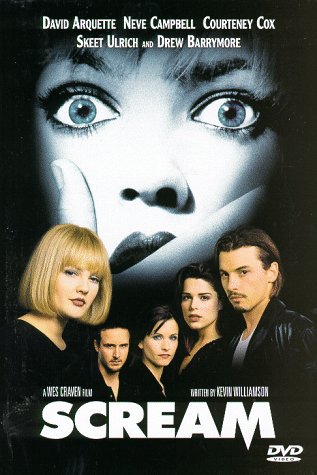
Scream: A hidden killer is making his way through a group of friends killing them one by one. The audience are left guessing throughout who the killer is and what their motives are.


Sub-genres of thriller films- example
A sub-genre of a thriller film is psychological, and an example is ‘Orphan’ as the little girl is struggling mentally and emotionally.
Another sub-genre is supernatural, ‘what lies beneath’ is an example as it has paranormal activity with in the movie.
Crime/Thriller - Taken as the protagonist has to solve a crime in order to find his daughter who has been kidnapped.
Action/Thriller - This is like a film like Speed where the protagonist has to save people from dying on a moving bus. An antagonist is behind it all as he is seeking revenge to authority figures.
Thriller/Horror - Halloween. A young Michael Myers looks for revenge on people from his past. He wants to harm and kill people along the way.


 Audience response to thrillers
While watching a thriller the audience usually reacts physically and psychologically. When the audience react physically, they may do things like shake, close their eyes, their goose-bumps might go and hairs might raise. This is out of their bodily control. When audiences react psychologically, they will be scared at night, might cross-over on the street etc or want to sleep with the light on.


Why is it a popular genre?

Thrillers are important genres for many reasons that the audience isn’t always aware of. Some watch it because they like thrillers, some watch it because they’re pressured into it, but mainly people watch it because the film they watch excites them and makes them question why things happen like they did. For example films like orphan scares the audience and may even make them scared of every little girl they see. But knowing this doesn’t stop them from watching it because it’s the thrill that there looking for.